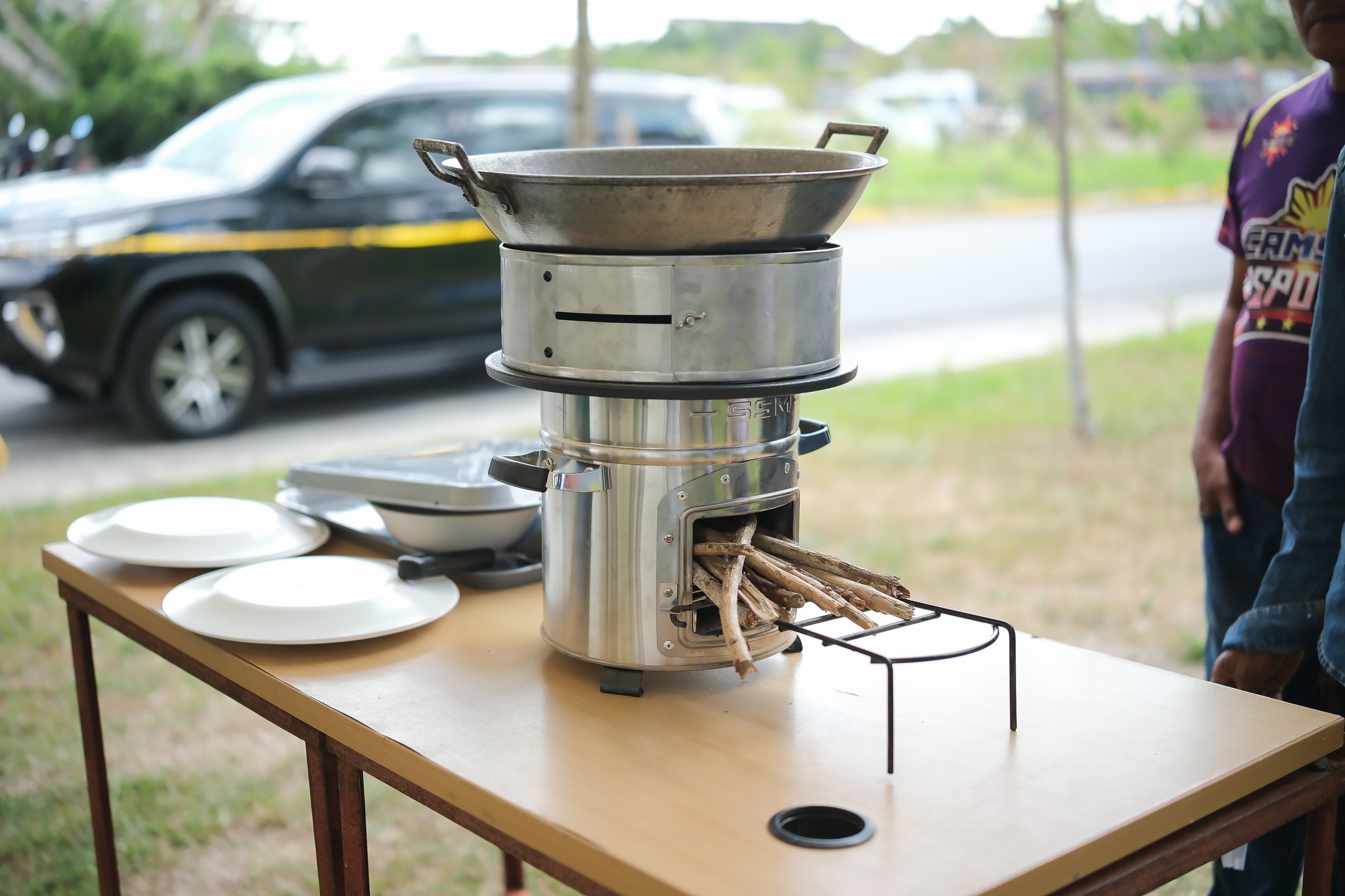
The Provincial Government of Camarines Sur officially launched the Kalanisan Improved Cookstoves Project, a large-scale clean energy initiative that will distribute 250,000 fuel-efficient cookstoves to households across the province, marking one of the most ambitious community-based climate and public health programs in the region.
By replacing traditional wood-burning stoves with improved models, the program aims to significantly reduce indoor air pollution, lower fuel consumption, and help mitigate the effects of climate change.
Rob Cayzer, Program Leader of Kalanisan Development Corporation, explained that the initiative is designed to help the province achieve its developmental goals. "The project actually aims at ensuring that we can help CamSur achieve its developmental goals—to take CamSur to the next level, not just economically and socially, but also environmentally. This project touches all three," Cayzer shared.
He further detailed its multifaceted benefits, noting that the economic aspect involves reducing the cost of cooking amidst rising fuel prices. Socially, the stoves provide individuals with more time for education and health while reducing respiratory issues. Environmentally, the clean cookstoves will drastically reduce carbon emissions.
To facilitate the rollout, the Provincial Government held a Local Stakeholders Meeting involving the Kalanisan Development Corporation, local chief executives, municipal coordinators, and representatives from various municipalities. Cayzer emphasized that the partnership with the local government units is vital.
"The key part of our approach is working closely with the LGU. Having a leader like Governor Lray—it wouldn’t be possible without him. He showed us that he can support us with the project, and we’re excited about it," he added.
Governor Luis Raymund “Lray” Villafuerte highlighted the initiative as both a critical health intervention and an essential step toward long-term sustainability.
“Through the Kalanisan Improved Cookstoves Project, we are bringing real, tangible change to thousands of households. This is not just about stoves. Ito ay tungkol sa mas malinis na hangin sa loob ng tahanan. Ito ay tungkol sa mas kaunting gastos sa panggatong. Ito ay tungkol sa mas maraming oras para sa pamilya at kabuhayan. At higit sa lahat, mas ligtas at mas malusog na pamumuhay. Mas kaunting usok, mas maraming buhay ang mapapahaba,” shared the Governor.
Millions of Filipino families currently rely on traditional cooking methods that expose households—particularly women and children—to harmful smoke linked to respiratory illnesses like asthma and pneumonia. The Kalanisan program directly addresses this issue by offering an 80% reduction in fuelwood use and a 77% reduction in indoor air pollution. These improvements lead to significant time savings for families and a lower carbon footprint through more efficient energy use.
The project is registered under Verra’s Verified Carbon Standard (VCS), allowing it to generate certified carbon credits while delivering measurable climate benefits. Governor Villafuerte noted that by reducing smoke, lives are prolonged, and the fight against climate change is strengthened—starting right from our homes.
The Kalanisan initiative is being implemented in partnership with development organizations and supported by national government agencies, local government units, and private sector stakeholders.
“Ang panawagan ko sa ating mga LGUs, barangay leaders, at beneficiaries, tangkilikin po natin ito. Gamitin natin ito ng tama at ipasa natin ang kaalaman sa iba. Kapag tinanggap natin ang pagbabago, doon nagsisimula ang tunay na pag-unlad. Let this not be just a project, but a movement. A movement towards cleaner homes, healthier families, and a greener province,” urged Governor Villafuerte.
Beyond the household level, the program contributes to forest protection by reducing the demand for firewood and aligns with several Sustainable Development Goals (SDGs), including Good Health and Well-Being, Climate Action, and No Poverty.
Municipal Kagawad Marcelo Roland Villafuerte of Tigaon, one of the participants during the meeting, expressed hope that the initiative will reduce carbon emissions while providing economic relief to small vendors and families facing high LPG and gasoline prices. He noted that for Indigenous Peoples (IPs), the project is a significant help as it utilizes resources already present in their environment.
"Since libre, dai na din sinda maluwas ning kapital, and for sustainability, yaon na sa paligid ang pwedeng gamiton na mga materyales tanganing mapagana asin magamit ini. Mas mama-maximize ta ang mga natural resources. Let us embrace this as a form of progress, innovation, and transition,” he shared.
The rollout of cookstoves is scheduled from 2026 to 2028, with phased distribution across target communities. This will follow a rigorous process including project design, validation of carbon rights, registration, impact verification, credit issuance, and financial support.
With Kalanisan, Camarines Sur strengthens its position as a leader in innovative, people-centered, and climate-responsive governance—anchored on its vision of a Greener CamSur.

 Provincial Government of Camarines Sur