Camarines Sur, while known for its world class tourism destinations, is a province tested by multiple typhoons every year. Due to its location and terrain, CamSur is highly vulnerable to natural calamities, such as typhoons, floods, and storm surges. For this reason, the Provincial Government of Camarines Sur has been steadfast in creating solutions that will help alleviate the life of its people.
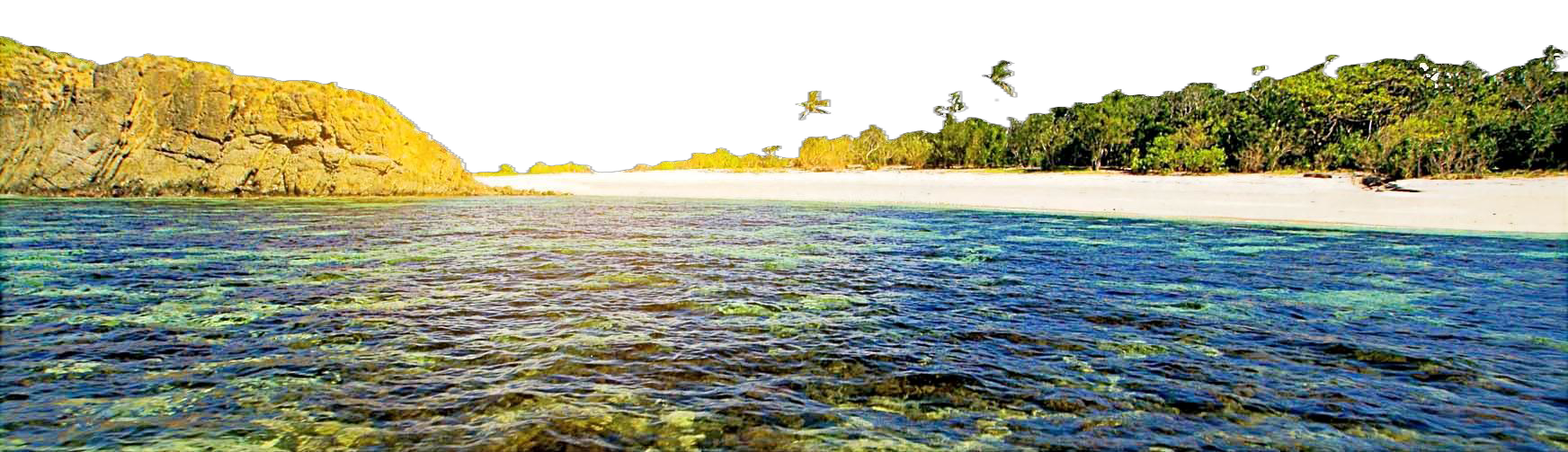
Within the province of CamSur is the municipality of Tinambac known for its underrated but magnificent beaches and rich ecotourism. Within the municipality of Tinambac, lies a community with a life of simple means. Barangay Old Caaluan is among the coastal barangays of Tinambac. Because of this, the primary source of income of families in this small community is fishing.
Barangay Old Caaluan, because of its location, is among the barangays that usually suffer the adverse effects of typhoons that hit the province. Fearing for their lives and their family’s safety, many of the locals decided to leave and relocate to a much safer location. It came to a point when there were no more than 33 households left in Old Caaluan, but this gradually changed in 2011.
Headed by then Governor Lray Villafuerte, the Provincial Government of Camarines Sur launched the El Verde Movement in February 2011 to promote the preservation and protection of the environment by planting millions of trees in watersheds, upland and coastal forests, and mangrove swamps.
In only over a year after its initiation, the El Verde Movement, under then Governor Lray, was able to successfully plant 12 million coastal and upland trees. In 2013, when Governor Migz Villafuerte assumed the gubernatorial office, he furthered the actions of the movement in protecting and rehabilitating the environment. By December 2020, a year before his last term, the El Verde Movement was able to plant 40 million trees across the province. It was also under his leadership that the El Verde Youth for Climate Action (EVYCA) was established in 2014.
Mangrove Plantation as protection against natural calamities
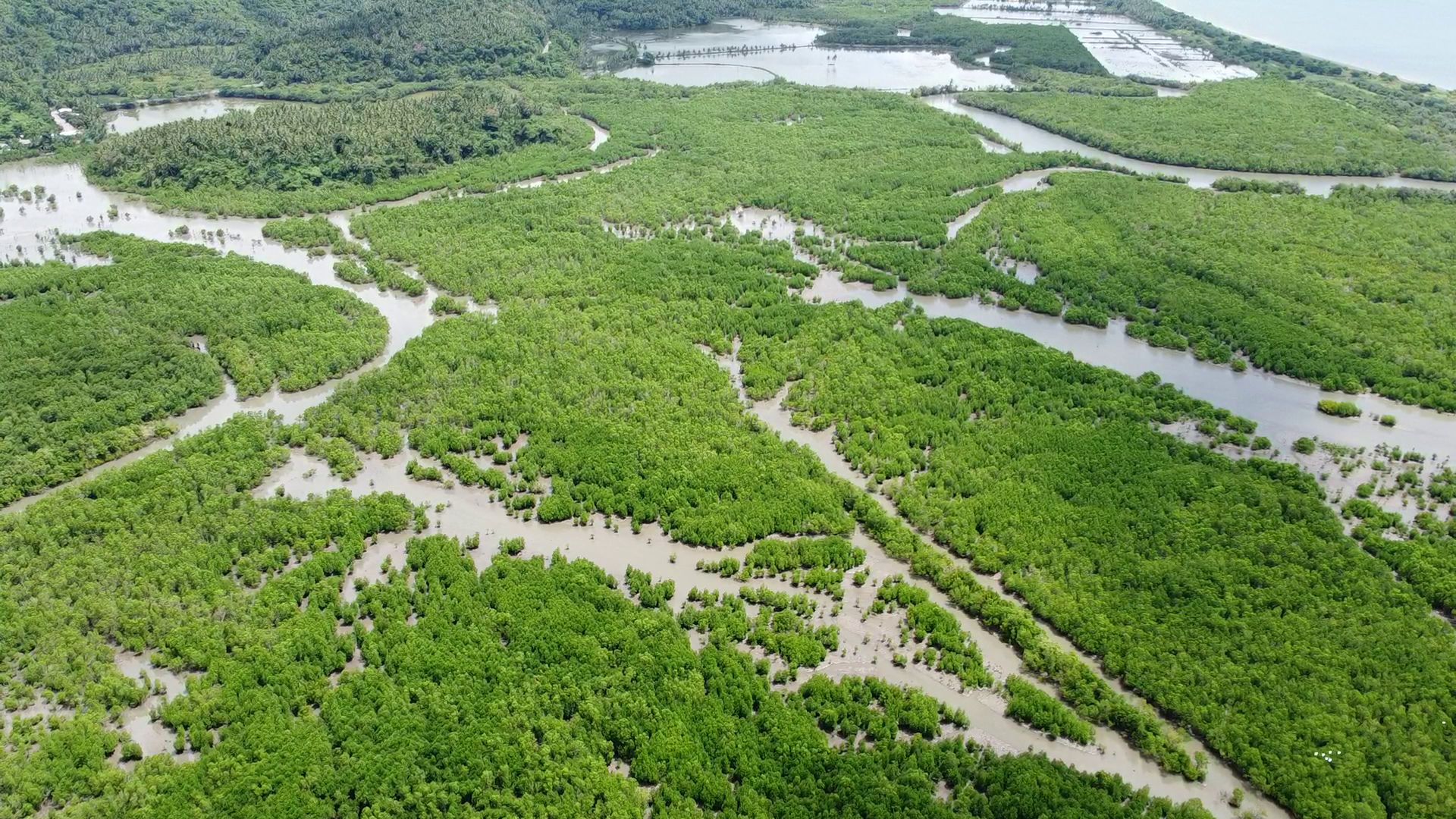
With the launching of El Verde, mangroves were planted in Tinambac covering six barangays, namely, Old Caaluan, New Caaluan, Mananao, Sta. Cruz, Bagacay, and Bolaobalite, creating an ecosystem helping the lives of those living in these communities. Mangroves are known as natural barriers against coastal floods and big waves, but the mangrove plantation of the El Verde is only one of the many benefits it offered the locals of Old Caaluan.
“Kadto pong mayo pa digding patanom nin mangrove, pag may kalamidad talagang hinahagupit kami nin sobra. An mga harong mi talagang tigdadabalan yan kan bahod, nagkakagaraba,” recollected Josefino Barrameda Jr. of their life before the mangrove plantation.
Josefino Barrameda Jr., fondly called as “Kuya Kikoy” within their community, is the caretaker of the mangrove plantation in Old Caaluan, and is among the beneficiaries of the El Verde Movement.
One of the worst typhoons Kuya Kikoy experienced and will never forget was the category-5 Typhoon Rosing that hit the region on the night of October 1995. “Grabe po kaito si Bagyong Rosing ta super typhoon talaga siya. Nasa atop na po ako kaito kang plaza, kaya lang sa kusog kan duros tsaka alon, nagkararaot naman po si atop kaya napiritan na lang akong maglukso sa baha,” he shared. After having to jump the plaza-high floodwater, Kuya Kikoy swam the stormy flood across the neighbor barangay, Sta. Cruz, looking for shelter.
With his personal experiences during typhoon and the perils he endured because of it, his gratitude and happiness compared to nothing when he heard of the El Verde Movement and the commencement of the mangrove plantation in Old Caaluan in 2011.
In 2010, a year before the birth of El Verde, Kuya Kikoy has begun planting small numbers of mangrove propagules in their community. Having witnessed his dedication and eagerness to ensure the rehabilitation of the mangroves and the prevention of the floods, he was entrusted the caretaker role since the beginning of the mangrove plantation. Kuya Kikoy will set out at the break of dawn to plant mangrove propagules and will return at sundown, only taking a break when his children bring him his food.
The mangrove plantation in Tinambac now covers 208 hectares of plantation and 112 natural stands, all of which are under the protection of the Provincial Government of Camarines Sur and Local Government Unit of Tinambac.
With the mangrove as their natural barrier against typhoon, Kuya Kikoy compared his experience in 2020 when three strong typhoons hit the region. “Kan 2020 po, makukusog talaga kadto si mga bagyo, an bahod pati darakula pero maray ngani ta uyan na an mga mangrove. Nagtatama na an bahod sa kahoy kaya su impact kadikit na sana. Saradit na sana an bahod pagtama digdi sa samuyang mga kaharongan.” While the locals still needed to evacuate during typhoons, they were now at peace knowing that their homes are much safer than before.
As the caretaker, Kuya Kikoy propagates the mangrove propagules in his nursery, he teaches the local planters the proper way to plant the propagules, explores the areas where more mangroves can be planted, and safeguards its protection from illegal cutters.
“Naoogma po ako ta tiniwalaan ako kang probinsya kaya man naglapigot ako na magibo talaga asin magampanan an trabaho ko.” Talking about his dedication to his work is a sensitive topic for Kuya Kikoy after feeling overwhelmed and appreciated by the trust and confidence that the province has given him.
Livelihood improvement as Mangrove Plantation grows
Apart from the protection against typhoon and big waves, the mangrove plantation has also helped the local fisherfolks of Old Caaluan. The mangrove forest has become an ecosystem to many wildlife and fish.
“Dakulon po an naitabang kaining mangrove plantation sakuya. Inot na inot, may nasusweldo man po ako. Tapos ngunyan, dahil digdi sa mga mangrove, dakol na ako nakukua pag nagsisira,” shared Kuya Kikoy.
According to Kuya Kikoy, prior the mangrove plantation, he would consider himself lucky if he could catch 3 kilos of fish every day, but now, with the mangroves, the fisherfolks of Old Caaluan can catch as much as a hundred kilos of fish every day.
Because of his salary as a caretaker, his compensation for planting mangroves, and his increased income for fishing, he was able to support his family and send his kids to school. One of Kuya Kikoy’s daughter is now a graduating Criminology student in Manila, while the other one is a senior high school student in Tinambac.
Another inspiring story of the benefits of the mangrove plantation is that of Rosario Barrogo, who, just like Kuya Kikoy, is a fisherfolk. “Masakit talaga kadto kan mayo pang mga bakawan digdi,” began Barrogo. “An trabaho mi lang kadto, pagpunaw. Pero diyan sa pagpunaw, dai mo man makukua gabos na pangangaipo kan harong nindo,” she continued.
Pagpunaw, or fishing for shell fish, was the primary source of income of Barrogo’s family, much like everybody else in Old Caaluan. While it helped them put food on their table, it barely covers their other needs such as water, clothing, and school fees.
When the mangrove plantation began in Old Caaluan, life changed for Barrogo’s family. Her husband was among the locals who helped in planting the mangroves where they were paid through the Food-for-Work Program. They received sacks of rice in payment for the mangrove propagules they planted.
Also, with the rich ecosystem in the mangrove plantation, their lives as a fisherfolk changed.
“Mas maray asin mas dakol na po an samuyang nakukua ngunyan kaysa kan nakaaging panahon. Kun dati po puros punaw lang an nakukua mi, ngunyan dakol na ta diyan na nagsusugok asin nagpapahingalo su mga sira. Igwa na kami ngunyan nakukua arog kan aniit, aliso, tingarog, tikero, lapu-lapu, igat, asin kun ano-ano pa pong klase nin sira,” revealed Barrogo.
Barrogo shared that with the mangrove plantation, fishing has become more abundant for them. If in the past they used to struggle to make ends meet, now they can get as much as two large sacks of various fish and mud crabs, earning them more than 100 kilos of catch each day.
According to Barrogo, she was able to send her two children to school. And even now that both of them have their own families, she’s still able to provide for them and help them with their everyday needs.
Developmental change in quality of life with the El Verde Program
Aside from the substantial improvement in their fishing, what didn’t escape Barrogo’s notice is the development their barangay had since the El Verde’s mangrove plantation. “Kun ikukumpara po kadto sa ngunyan, talagang mas magayon na ngunyan. Lalo-lalo na sa mga pangangaipo asin hanapbuhay, dakula talaga an naitabang. Kaya naoogma ako ta nahiling ko si pag-unlad kan samuyang barangay,” reflected Barrogo.
With the developmental changes and improvement in the community of Old Caaluan, many of the locals who left came back and new locals of the municipality relocated to the barangay after hearing of and witnessing the help and benefits of the programs of the Provincial Government. From no more than 33 households, Old Caaluan now has 80 contented and delighted households. What used to be an abandoned fish pond is now a mangrove ecosystem where life and hope thrive.
Kuya Kikoy and Barrogo, two of the many witnesses and beneficiaries of the El Verde’s mangrove plantation, both aspire for the continuation and expansion of the program as it helps, not only them and their families, but all of the Old Caaluan and the wildlife and fish that live within it.
In the course of 12 years, the El Verde Movement plants millions of trees in upland and coastal areas each year. The Philippines harbors 39 species of mangrove. Of these, 28 species can be found at the Tinambac Mangrove Plantation, the biggest plantation area in the province. This is not only helpful to the locals but as well as to students conducting their research. Many undergraduate and graduate students of Ateneo De Naga University, University of Nueva Caceres, Partido State University, and Central Bicol State University of Agriculture opt to conduct their research in Tinambac because of its diverse mangrove species.
The El Verde Movement seeks to protect the environment through plantations and rehabilitations, alleviate poverty, and provide livelihood. Under the developmental and visionary leadership of Governor Luigi Villafuerte, the Provincial Government of Camarines Sur is sure to further improve and bring the El Verde Movement to greater heights.
Governor Luigi aims to plant 1 million mangroves in coastal areas and 500,000 upland trees within his first 100 days. Moreover, the province will reconstruct the bamboo-walk in the mangrove plantation that was destroyed by the typhoon and reestablish the Mangrove Ecopark that began during the leadership of former Governor Migz Villafuerte. Under Governor Luigi, the Provincial Government will also establish a Mangrove Learning Center to cater and assist researchers, tourists, and guests in the mangrove plantation.


 Provincial Government of Camarines Sur